


Spark Plugs For Garden Machinery
A spark-ignition is very common in the contemporary world. It is the primary component used in engines that use gas to run, such as cars, chain saws, and lawn mowers. The spark plug is used to conduct electric current from the ignition system to the engine’s combustion chamber.
Founded in 2007, Newbetter Zhuzhou auto parts is located in Zhuzhou, the largest transportation hub and industrial hub in southern China. The company's geographical location, rich in natural resources. The Hemerocallis fulva airport and the Wuhan-guangzhou high-speed railway are close at hand. The main railway lines of Beijing-guangzhou, Zhejiang-jiangxi, Hunan-guizhou are close to the periphery. 106, China National Highway 320 and the Beijing-zhuhai and Shangrui expressways encircle the urban area. The company is a professional manufacturer of spark plugs. Existing"NBT", "NOSOK" and other trademarks, the production of spark plugs are widely used in high-end cars, motorcycles, small generators, gasoline engines.
Why Choose Us?
High quality
The company has spark plug manufacturing professionals and advanced equipment.
Competitive Price
We offering a higher-quality product or service at an equivalent price. As a result we have a growing and loyal customer base.
Rich experience
Our company has many years of roduction experience! to update the technology, more reliable performance, more perfect after-sales service return to our customers.
Advanced equipment
Have advanced equipment, designed with advanced technology and functionality to perform highly specific tasks with greater precision, efficiency and reliability.
Related Product


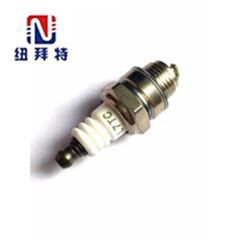


What is Spark Plugs For Garden Machinery?
A spark-ignition is very common in the contemporary world. It is the primary component used in engines that use gas to run, such as cars, chain saws, and lawn mowers. The spark plug is used to conduct electric current from the ignition system to the engine's combustion chamber. The spark plug produces an electric spark at the gap at its tip. The spark then ignites the compressed fuel and air, starting the engine and keeping it running. The spark plugs are, therefore, very crucial components.
Benefits of Spark Plugs For Garden Machinery
They help provide the necessary ignition to the air and fuel mixture in the cylinders.
They help maintain the correct timing between the opening and closing of the valves.
Spark plugs help reduce fuel consumption by up to 15%.
They also help limit emissions from the engine by up to 30%.
Spark plugs help improve the performance of the engine by providing better combustion.
They also help extend the life of the engine by preventing pre-ignition and knock.
Types of Spark Plugs For Garden Machinery
Copper spark plugs
These are the most common type of spark plugs and are known for their excellent heat transfer capabilities. They are relatively inexpensive but have a shorter lifespan compared to other types.
Platinum spark plugs
Platinum spark plugs have a platinum disc welded to the center electrode, which helps improve their durability and lifespan. They also provide better performance and fuel efficiency compared to copper spark plugs.
Iridium spark plugs
Iridium spark plugs are the most advanced and durable type of spark plugs. They have a fine wire center electrode made of iridium, which allows for better spark ignition and longevity. Iridium spark plugs are more expensive but offer superior performance and fuel efficiency.
Ribs:
Insulator ribs provide added protection against secondary voltage or spark flashover and also help to improve the grip of the rubber spark plug boot against the plug body.
The insulator body is molded from aluminum oxide ceramic. In order to manufacture this part of the spark plug, a high-pressure, dry molding system is utilised. After the insulator is molded, it is kiln-fired to a temperature that exceeds the melting point of steel. This process results in a component that features exceptional dielectric strength, high thermal conductivity and excellent resistance to shock.
Insulator:
The insulator body is molded from aluminum oxide ceramic. In order to manufacture this part of the spark plug, a high-pressure, dry molding system is utilised. After the insulator is molded, it is kiln-fired to a temperature that exceeds the melting point of steel. This process results in a component that features exceptional dielectric strength, high thermal conductivity and excellent resistance to shock.
The pointer shows the spark plug insulator. As mentioned above, it is formed from aluminum oxide ceramic. The outer surface is ribbed to provide grip for the spark plug boot and to simultaneously add protection from spark flashover (crossfire).
Hex:
The hexagon provides the contact point for a socket wrench. The hex size is basically uniform in the industry and is generally related to the spark plug thread size.
Shell:
The steel shell is fabricated to exact tolerances using a special cold extrusion process. Certain types of spark plugs make use of a steel billet (bar stock) for shell construction.
Plating:
The shell is almost always plated. This enhances durability and provides for rust and corrosion resistance. The steel shell is fabricated to exact tolerances using a special cold extrusion process or in other specialised cases, machined from steel billet. The hexagon machined onto the shell allows you to use a socket wrench to install or remove the plug.
Gasket:
Certain spark plugs use gaskets while other examples are "gasketless." The gasket used on spark plugs is a folded steel design that provides a smooth surface for sealing purposes. Gasketless spark plugs use a tapered seat shell that seals via a close tolerance incorporated into the spark plug.
Threads:
Spark plug threads are normally rolled not cut. This meets the specifications set forward by the SAE along with the International Standards Association.
Ground electrode:
There are a number of different ground electrode shapes and configurations, but for the most part, they are manufactured from nickel alloy steel. The ground electrode must be resistant to both spark erosion and chemical erosion, both under massive temperature extremes.
Centre electrode:
Centre electrodes must be manufactured from a special alloy that is resistant to both spark erosion and chemical corrosion. Keep in mind that combustion chamber temperatures vary (and sometimes radically). The centre electrode must live under these parameters.
Spark park electrode gap:
The area between the ground electrode and the centre electrode is called the gap. Centre electrodes must be manufactured from a special alloy that is resistant to both spark erosion and chemical corrosion.
Insulator nose:
There are a large number of insulator nose shapes and sizes available, but in essence, the insulator nose must be capable of shedding carbon, oil and fuel deposits at low speeds. At higher engine speeds, the insulator nose is generally cooled so that temperatures and electrode corrosion are reduced.
Process of Spark Plugs For Garden Machinery
Material preparation
The first step involves preparing the necessary materials for each part of the spark plug. This includes various metals like steel, nickel alloy, copper, platinum, and iridium for the electrodes and shell, and ceramic for the insulator.
Making the insulator
The ceramic insulator is typically made by mixing alumina powder with binders and other additives, and then pressing the mixture into the shape of the insulator. The insulator is then fired at a high temperature to sinter it, which gives it its final strength and properties.
Forming the electrodes
The electrodes are typically formed from metal wire or powder. The center electrode might be made from a copper core with a nickel alloy, platinum, or iridium tip, while the ground electrode is usually made from a nickel alloy.
Assembling the spark plug
The center electrode is inserted into the insulator, and a metal shell is added around the insulator. The ground electrode is then welded to the shell. The spark plug is then sealed, either with a glass seal or a mechanical seal.
Gapping
The spark plug's gap - the distance between the center and ground electrode - is set. This gap is crucial because it determines where the spark will occur.
Inspection and testing
The finished spark plugs are inspected for any defects, and tested to ensure they meet the required specifications. This could include tests for dimensions, performance, and durability.
How to Maintain Spark Plugs For Garden Machinery
Regular inspection
Regular inspection and addressing these issues promptly contribute to the optimal performance and longevity of your engine's spark plug system.
Cleaning
A: If there are deposits on the spark plugs, clean them using a wire brush or a specialized spark plug cleaner.
B: Be gentle to avoid damaging the electrodes.
Gap check
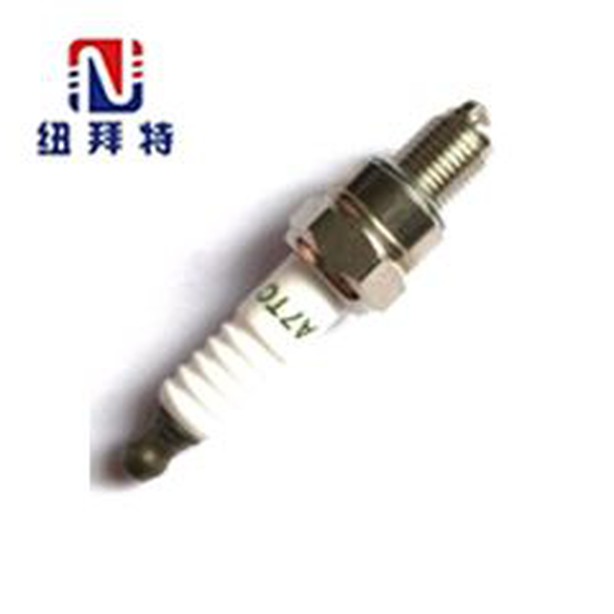
The gap between the center and ground electrode of the spark plug is critical. Check and adjust the gap using a spark plug gap tool if necessary.
Torque check
Ensure that the spark plugs are tightened to the manufacturer's recommended torque. Over-tightening can lead to damage.
All gas-powered lawn mowers and snowblowers, along with hand-held products like chainsaws, string trimmers, and leaf blowers, use a spark plug to ignite a mixture of fuel and air to start and run the equipment's engine. The ignition process relies on a suitable balance of fuel and air being drawn through the carburetor into the engine, a properly operating ignition coil, and a functioning spark plug. When the engine's starter rope is pulled, the starter engages a drive cup on a flywheel and rotates a crankshaft which moves a piston up and down within the engine cylinder. As the piston travels downward, it draws the fuel and air into the engine's combustion chamber. The flywheel has permanent magnets built into it, and as it moves past the ignition coil a magnetic field is created which induces electricity, allowing the ignition coil to send a high-voltage pulse to the spark plug. When the piston reaches the top of the cylinder, the spark plug ignites the compressed fuel and air mixture, forcing the piston back down. The spent fuel exits an exhaust port, fresh fuel enters the intake port, and the combustion process is repeated to keep the engine running.
Testing and Tuning Process
The goal is to find out what heat range, what gap, and what material work best for your engine combination. You do this through engine tuning using your favorite tuning software (or carb).
Picking a set of spark plugs to start with: We recommend starting with a common copper spark plug from your favorite brand and setting the plugs with a known gap that works for your build. Forced induction is typically on the lower side of the gap range (the aforementioned .025–.060 inches) while naturally aspirated is typically on the middle or higher side.
Tuning process: Chassis or dyno tuning is preferred, as we can accurately judge performance gains and watch for knock retard in a controlled environment to find the maximum safe performance, noting what our key indicators are telling us. These include:
Boost-If equipped, how much will it tolerate before knocking?
Spark advance-How much will it tolerate before knocking, and did we reach maximum power before we found knock? The right plugs will allow the best spark tolerance before knock will occur on the fuel you are using.
Air/fuel ratio or lambda-Did the engine prefer a much richer mix to quench knock? If so, is the plug too hot?
These key indicators will drive which way you go with spark plug heat range, gap, and material selection. For example, testing a colder plug may be indicated if you cannot reach a high enough spark advance before encountering knock on the fuel you intend to use. Conversely, trying a hotter plug may be indicated if you can run more spark advance than the engine needs to make maximum power before encountering knock. The ideal spark plug will help you reach maximum power before encountering knock retard.
5 Things You Don't Know About Spark Plugs
The use of a spark device to ignite a fuel-air mixture was first demonstrated way back in 1777 by Italian physicist Alessandro Volta, who also advanced the study of electrical capacitance. The scientific world was suitably impressed and dubbed the unit of electrical potential after him: volt. He also invented the conventional storage battery. Smart guy.
A minimum of 20,000 volts is required for most spark plugs in an automotive internal-combustion engine, but modern engines' ignition systems can generate 40,000 volts or more.
Within the first 2 nanoseconds of its arc, the spark reaches 100,000 degrees F – about 10 times hotter than the surface of the sun.
Iridium is used in many plugs to increase durability. A member of the platinum group of metals, iridium is one of the densest chemical elements and is very heat resistant. Because of its abundance in the earth's crust, its existence is largely attributed to meteorite impacts millions of years ago.
The ceramic material used in the spark plug insulator – the white body that wraps around the central terminal – is composed mostly of an aluminum oxide material designed to withstand the heat and pressure generated by the voltage that passes through the plug. That wasn't always the case, however. Early spark plug designs used porcelain, mica (a silicate mineral), glass and even – we are not making this up – wood.
Spark Plug Fouling and How to Avoid It
In most cases spark plug fouling can be reduced or eliminated by simply applying proven operating techniques. For example, low operating temperatures coupled with rich fuel mixtures result in incomplete vaporization of the tetraethyl lead in the combustion chamber, causing lead fouling of the spark plugs. Maintaining proper cylinder head temperatures will minimize plug fouling problems. In addition:
Be certain that maintenance personnel have installed the spark plugs recommended for the particular engine installation.
Have the carburetor idle mixture checked and adjusted.
Use recommended leaning techniques in cruise condition at all altitudes.
Avoid low power letdowns, descend with power, and avoid over-rich conditions. Carburetors and fuel injectors are normally set slightly rich in the closed throttle position, so it is best to carry a slight amount of power on landing approaches rather than approach with closed throttle.
Keep the cylinder temperatures in the normal range during operation.
After flight or ground operations, before shutdown, advance the throttle to about 1800 RPM for 15 to 20 seconds to clear the plugs and combustion chambers, retard the throttle to about 1200 RPM and shut the engine off immediately with the mixture control. You should not have plug fouling or misfiring on your next startup.
Founded in 2007, Newbetter Zhuzhou auto parts is located in Zhuzhou, the largest transportation hub and industrial hub in southern China. The company's geographical location, rich in natural resources.


Our Certificate


FAQ
Hot Tags: spark plugs for garden machinery, China spark plugs for garden machinery manufacturers, lawn mower spark plugs for regular mowing, lawn mower spark plugs for patchy grass lawns, lawn mower spark plugs for coarse grass lawns, lawn mower spark plugs efficiency test, quality lawn mower spark plugs, lawn mower spark plugs removal




Send Inquiry
