


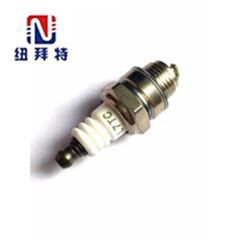
Chainsaw Spark Plug
Its main function is to ignite the air-fuel mixture by delivering an electrical spark from the ignition system to the combustion chamber, lighting the fuel which pushes the pistons down, ultimately allowing the engine to start and run.
Founded in 2007, Newbetter Zhuzhou auto parts is located in Zhuzhou, the largest transportation hub and industrial hub in southern China. The company's geographical location, rich in natural resources. The Hemerocallis fulva airport and the Wuhan-guangzhou high-speed railway are close at hand. The main railway lines of Beijing-guangzhou, Zhejiang-jiangxi, Hunan-guizhou are close to the periphery. 106, China National Highway 320 and the Beijing-zhuhai and Shangrui expressways encircle the urban area. The company is a professional manufacturer of spark plugs. Existing"NBT", "NOSOK" and other trademarks, the production of spark plugs are widely used in high-end cars, motorcycles, small generators, gasoline engines.
Why Choose Us?
High quality
The company has spark plug manufacturing professionals and advanced equipment.
Competitive Price
We offering a higher-quality product or service at an equivalent price. As a result we have a growing and loyal customer base.
Rich experience
Our company has many years of roduction experience! to update the technology, more reliable performance, more perfect after-sales service return to our customers.
Advanced equipment
Have advanced equipment, designed with advanced technology and functionality to perform highly specific tasks with greater precision, efficiency and reliability.




What is Chainsaw Spark Plug?
Its main function is to ignite the air-fuel mixture by delivering an electrical spark from the ignition system to the combustion chamber, lighting the fuel which pushes the pistons down, ultimately allowing the engine to start and run.
Benefits of Chainsaw Spark Plug
Increases engine performance and efficiency:
A worn-out spark plug causes engine misfiring. Other problems that might occur include a buck, stall, rough running, or sluggish starting. Your chainsaw will perform better and operate at peak efficiency when you change the spark plugs.
Fully functioning combustion process:
Fully functioning spark plugs ensure a fully functional combustion process. Once you achieve this process with your new pieces, you can say goodbye to all the performance issues you were experiencing before. This is because optimal combustion means that all the cylinders in your engine are firing correctly. If they are not, it can cause problems like misfires, hesitations, and decreased fuel economy.
Improves fuel economy:
Another advantage of having adequately functioning spark plugs is improved fuel economy. The combustion process will be more efficient, meaning that you will need less fuel to power your chainsaw.
Reduces emissions:
Replacing the spark plugs can also help to reduce emissions from your chainsaw. This is because old and worn-out spark plugs can cause incomplete combustion, which leads to the production of harmful pollutants like carbon monoxide and hydrocarbons. Replacing your spark plugs will help to keep these emissions low and protect the environment.
Copper: These spark plugs feature a center electrode that has a copper core coated with a nickel alloy. These are inexpensive, but not widely used today since they aren't very durable.
Platinum: These are similar to copper plugs, but the center electrode (and sometimes the ground electrode) use platinum. They are more durable and allow for a longer lifespan.
Iridium
These are the longest-lasting plugs and are more heat-resistant than platinum. These plugs also use a small center electrode, which requires less voltage to generate a consistent spark.
Ruthenium
This is one of the newest precious metals to be used in spark plugs. They claim improved durability over iridium, but carry a higher price tag.
Silver
These plugs feature silver-coated electrodes and may be seen in some performance applications. They aren't very common, since they are costly yet not as durable as platinum or iridium.
1.Ribs: Insulator ribs provide added protection against secondary voltage or spark flashover and also help to improve the grip of the rubber spark plug boot against the plug body.
The insulator body is molded from aluminum oxide ceramic. In order to manufacture this part of the spark plug, a high-pressure, dry molding system is utilized. After the insulator is molded, it is kiln-fired to a temperature that exceeds the melting point of steel. This process results in a component that features exceptional dielectric strength, high thermal conductivity and excellent resistance to shock.
2.Insulator: The insulator body is molded from aluminum oxide ceramic. In order to manufacture this part of the spark plug, a high-pressure, dry molding system is utilized. After the insulator is molded, it is kiln-fired to a temperature that exceeds the melting point of steel. This process results in a component that features exceptional dielectric strength, high thermal conductivity and excellent resistance to shock.
The pointer shows the spark plug insulator. As mentioned above, it is formed from aluminum oxide ceramic. The outer surface is ribbed to provide grip for the spark plug boot and to simultaneously add protection from spark flashover (crossfire).
3.Hex: The hexagon provides the contact point for a socket wrench. The hex size is basically uniform in the industry and is generally related to the spark plug thread size.
4.Shell: The steel shell is fabricated to exact tolerances using a special cold extrusion process. Certain types of spark plugs make use of a steel billet (bar stock) for shell construction.
5.Plating: The shell is almost always plated. This enhances durability and provides for rust and corrosion resistance. The steel shell is fabricated to exact tolerances using a special cold extrusion process or, in other specialized cases, machined from steel billet. The hexagon machined onto the shell allows you to use a socket wrench to install or remove the plug.
6.Gasket: Certain spark plugs use gaskets while other examples are "gasketless." The gasket used on spark plugs is a folded steel design that provides a smooth surface for sealing purposes. Gasketless spark plugs use a tapered seat shell that seals via a close tolerance incorporated into the spark plug.
7.Threads: Spark plug threads are normally rolled, not cut. This meets the specifications set forward by the SAE along with the International Standards Association.
8.Ground electrode: There are a number of different ground electrode shapes and configurations, but for the most part, they are manufactured from nickel alloy steel. The ground electrode must be resistant to both spark erosion and chemical erosion, both under massive temperature extremes.
9.Center electrode: Center electrodes must be manufactured from a special alloy that is resistant to both spark erosion and chemical corrosion. Keep in mind that combustion chamber temperatures vary (and sometimes radically). The center electrode must live under these parameters.
10.Spark park electrode gap: The area between the ground electrode and the center electrode is called the gap. Center electrodes must be manufactured from a special alloy that is resistant to both spark erosion and chemical corrosion.
11.Insulator nose: There are a large number of insulator nose shapes and sizes available, but in essence, the insulator nose must be capable of shedding carbon, oil and fuel deposits at low speeds. At higher engine speeds, the insulator nose is generally cooled so that temperatures and electrode corrosion are reduced.
Process of Chainsaw Spark Plug
- Now unthread the knobs securing the air filter cover and pull the cover off.
- Remove the wire and boot from the spark plug.
- Use the provided wrench to help loosen the old spark plug then unthread.
- Before you install the new spark plug, you need to confirm that the spark gap is at manufacturer's specifications.
- Now thread the plug into the cylinder and be careful not to strip the threads by over tightening.
- Attach the wire and boot to the new spark plug. Realign the cover and rethread the knob to secure. Replace the wrench in the handle base and turn the on/off switch to the on position.

How to Maintain Chainsaw Spark Plug
1.To access the spark plug, take off the cover.
2.Once the cover has been removed, pull the cap and wire off the spark plug. Before you go further, make sure that there is no corrosion on the top of the contact, and if there is, clean it with a wire brush. Also, make sure that you clean the area so it is free from dirt and debris.
3.To remove the spark plug, use a combi spanner with a large opening and turn it anticlockwise. Check the spark plug for any cracks or carbon deposits and check the contacts on the electrode.
4.If there are any carbon deposits on there, clean them with a wire brush.
5.If there is no damage to the spark plug and you were able to clean the electrode and the contact post, thread it back into the engine. Make sure that it is firmly seated with the socket wrench. Do not overtighten.
6.When applying the cap and wire to the post, make sure that it clicks into position.
How Do Chainsaws Generate Power for the Spark Plug?
The magneto or ignition coil is a component in the chainsaw's engine that generates high voltage electricity to create a spark at the spark plug. This spark ignites the fuel mixture in the engine's combustion chamber, driving the piston and powering the chainsaw.
The flywheel on the chainsaw's engine has a magnet attached to it. As the engine runs, the flywheel rotates. The magnet passing by the magneto or ignition coil generates an electrical current in the coil.
In older chainsaw models, the magneto system may include a condenser and points. The points open and close to interrupt the current flow in the ignition coil, creating a high-voltage spark at the spark plug.
The high-voltage electricity generated by the magneto or ignition coil travels through the spark plug wire to the spark plug. The spark plug then creates a spark across the electrode gap when the high voltage is applied, igniting the fuel-air mixture in the engine's combustion chamber.
Choosing the Right Spark Plug for Chainsaws
Every chainsaw user knows the significant role that spark plugs play in ensuring smooth engine performance.
However, not all spark plugs are identical, nor do they supply identical results. Therefore, selecting the right spark plug for your chainsaw is paramount and can remarkably boost its efficiency.
1.When choosing a spark plug for your chainsaw, concentrate on compatibility with your specific model first.
2.The key factors to consider include the temperature range of the plug as well as its resistance to fouling and corrosion.
3.A plug that works under optimal heat temperatures reduces carbon deposits and accelerates fuel economy.
4.Beneficially, anti-fouling or corrosion-resistant features prolong plug life! So yes – not all chainsaw plugs are the same, but picking out an ideal match for yours ensures durability and heightens machinery productivity.
5.Bear in mind, however, that though the quality of your chainsaw spark plug does have an impact on performance and longevity, routine maintenance should never be overlooked.
6.Regularly cleaning out your chainsaw's air filter is just as important as using a good-quality plug.
7.The dirty air filter inhibits airflow to the engine which affects its general ability to function at full capacity. A clean carburetor also makes sure that stores of fuel mix properly with incoming fresh air thus maintaining a balanced combustion process.
8.Additionally, appropriate oiling greatly enhances seamless machinery operations reducing wear and tear tremendously over time.
9.Equally significant is proper chain tensioning – too loose would increase kickback risk while too tight can cause premature wearing out.
10.Always remember safety precautions while handling chainsaws or any heavy-duty equipment for that matter; equip yourself with protective clothing like gloves and eye shields before you start working!
1.Start by removing the spark plug from the chainsaw. You can do this by using a spark plug wrench to loosen the spark plug from the engine.
2.Inspect the spark plug for any visible signs of damage or wear, such as cracks or a worn electrode. If the spark plug is damaged, it should be replaced.
3.Use a wire brush or a toothbrush to gently scrub away any carbon buildup or debris that may be present on the spark plug. Be sure to clean both the electrode and the threaded portion of the spark plug.
4.Once the spark plug is clean, use a small amount of oil to lubricate the threads. This will help to prevent rust and corrosion from building up on the spark plug.
5.Finally, reinstall the spark plug into the chainsaw and tighten it securely with a spark plug wrench.
Founded in 2007, Newbetter Zhuzhou auto parts is located in Zhuzhou, the largest transportation hub and industrial hub in southern China. The company's geographical location, rich in natural resources.


Our Certificate


FAQ
Hot Tags: chainsaw spark plug, China chainsaw spark plug manufacturers, lawn mower spark plugs for agricultural lawns, high performance lawn mower spark plugs, lawn mower spark plugs for private areas, lawn mower spark plugs for snowy conditions, lawn mower spark plugs installation, quality lawn mower spark plugs




Send Inquiry
