


Spark Plug For Automotive
A spark plug supplies a small electrical spark. It ignites the fuel inside the combustion chamber at a precise moment, which pushes the cylinder down and then moves the car forward.
Founded in 2007, Newbetter Zhuzhou auto parts is located in Zhuzhou, the largest transportation hub and industrial hub in southern China. The company's geographical location, rich in natural resources. The Hemerocallis fulva airport and the Wuhan-guangzhou high-speed railway are close at hand. The main railway lines of Beijing-guangzhou, Zhejiang-jiangxi, Hunan-guizhou are close to the periphery. 106, China National Highway 320 and the Beijing-zhuhai and Shangrui expressways encircle the urban area. The company is a professional manufacturer of spark plugs. Existing"NBT", "NOSOK" and other trademarks, the production of spark plugs are widely used in high-end cars, motorcycles, small generators, gasoline engines.
Why Choose Us?
High quality
The company has spark plug manufacturing professionals and advanced equipment.
Competitive Price
We offering a higher-quality product or service at an equivalent price. As a result we have a growing and loyal customer base.
Rich experience
Our company has many years of roduction experience! to update the technology, more reliable performance, more perfect after-sales service return to our customers.
Advanced equipment
Have advanced equipment, designed with advanced technology and functionality to perform highly specific tasks with greater precision, efficiency and reliability.
Related Product

Brands: NBT
Item No.:PLKR7JIX
Terms of payment and delivery:POB/EXW/CIF
Price: TBD
Packing details: TBD


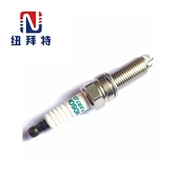
Automotive Single Iridium Spark Plug
Brands: NBT
Item No.:K7RTJIX
Terms of payment and delivery:POB/EXW/CIF
What is Spark Plug For Automotive?
A spark plug supplies a small electrical spark. It ignites the fuel inside the combustion chamber at a precise moment, which pushes the cylinder down and then moves the car forward.
Benefits of Spark Plug For Automotive
Improved fuel economy
One of the most significant benefits of changing your spark plugs is improved fuel economy. When they're working correctly, spark plugs help to ensure that the air/fuel mixture in the cylinders is burned efficiently. It means less fuel is wasted, and you'll get better mileage per gallon.
Prevent engine misfires
If your spark plugs are damaged, they can cause engine misfires. When the air/fuel mixture in the cylinders doesn't ignite properly, it can lead to a loss of power and decreased fuel economy. In extreme conditions, it can also damage your engine.
Better engine performance
In general, changing your spark plugs will result in better engine performance. Your car will drive smoother and more efficiently, and you may even notice increased power.
Reduced emissions
Changing your spark plugs can also help to reduce emissions from your car. Fouled or damaged plugs can cause the engine to run less efficiently, which means more harmful gases are emitted into the atmosphere.
Saves you money
Believe it or not, changing your spark plugs can save you money in the long run. As we mentioned before, fouled or damaged plugs can cause your car to run less efficiently. That means you'll be wasting money on gas that could be going towards other things.
Types of Spark Plug For Automotive
Copper spark plugs
The centre electrode of this type of spark plug is a copper core coated with a nickel alloy. It has the largest diameter of all the other spark plugs, so it needs more voltage to generate a spark.
Nickel alloy is a material that is soft and not very durable, so spark plugs will need to be replaced more frequently than other types. Some cars are designed to use copper spark plugs despite their shorter lifespan.
Iridium spark plugs
Iridium spark plugs last the longest since iridium is harder and more durable than platinum. These spark plugs have a small center electrode which requires less voltage to generate a spark. These advantages are reflected in the higher price tag.
Single platinum spark plugs
A single platinum spark plug is similar to a copper/nickel spark plug, except that its centre electrode has a platinum disc welded to the tip instead of an only nickel alloy. The platinum metal lasts longer than nickel alloy before being worn away.
These plugs also generate more heat, which reduces carbon buildup. This is the recommended material for new cars with a coil-on-plug ignition system.
Double platinum spark plugs
Double platinum spark plugs have a platinum coating on both the centre and ground electrodes. This is more efficient and longer-lasting which makes these plugs a great choice for a wasted spark ignition system, which exerts more wear on both electrodes than other ignition systems.
In a wasted spark ignition system, each ignition coil fires two spark plugs at once, one in the compression stroke's cylinder and the other in the exhaust stroke's cylinder.
The spark for the latter gets wasted because the air-fuel mixture was already burnt on the previous stroke. This ignition system is an improvement over distributor ignition systems because it isn't affected as much by rain or debris.
Silver spark plugs
These are less common than others and feature silver-coated electrode tips. These do not last as long as iridium or platinum spark plugs as the metal is less durable. They are most often used in older European performance cars and motorcycles.
Automotive engines: Spark plugs are integral to gasoline-powered vehicles, facilitating the ignition of the air-fuel mixture in the combustion chambers of internal combustion engines.
Motorcycles: Spark plugs are essential in motorcycle engines, ensuring efficient combustion and reliable ignition for optimal performance.
Small engines
From lawnmowers to chainsaws and generators, small engines in various equipment rely on spark plugs for ignition.
Aircraft engines
Spark plugs are used in some aircraft engines, playing a crucial role in initiating combustion and powering aviation propulsion systems.
Marine engines
Spark plugs are employed in outboard motors and other marine engines to facilitate combustion and ensure reliable performance on watercraft.
Copper electrode
The spark plug contains a copper electrode in the center.
Nickel alloy or precious metals
The electrode is surrounded by nickel alloy. More expensive spark plugs are composed of precious metals, such as platinum or iridium, which surround the copper electrode instead of nickel. It's believed that premium spark plugs can improve gas mileage but, in reality, any new set of plugs can generate the same results.
Porcelain
The center electrode is surrounded by porcelain, which is a conductor of heat. When performing spark-plug-related auto repair, be mindful to avoid hitting the porcelain with your tools.
Connector/terminal
The connector/terminal nut is the top of the spark plug. Below the terminal are the ribs of the plug. The ribs may be made of ceramic, and are delicate; you'll want to avoid touching the ribs with any of your tools to prevent damage.

Head hex
Below the terminal is the hex head is where your socket wrench makes contact with the plug when you install or remove it from your engine.
Gasket
At the base of the spark plug ribs is the gasket, also known as a crush washer or a seat.
Threads
The threads are the bottom of the spark plug, and where it screws into place in your engine.
Ground electrode
At the end of the threads is the ground electrode, which is the metal arm of the spark plug that may or may not need adjusting. It can be made of stainless steel or titanium.
Process of Spark Plug For Automotive
Gather the necessary tools and materials:
New spark plugs (make sure they are the correct type for your vehicle)
Socket wrench with an extension bar
Spark plug socket
Spark plug gap tool
Dielectric grease (optional)
Torque wrench (optional)
Prepare the car:
A: Park the car on a flat surface and let the engine cool down completely.
B: Open the hood and locate the spark plugs. They are usually found at the engine end of a bundle of wires.
Remove the old spark plug:
A: Gently remove the wire plug from one of the spark plugs.
B: Use a socket wrench with an extension bar and a spark plug socket to loosen and remove the spark plug. Turn it counterclockwise until it comes out.
Inspect the old spark plug:
Check the condition of the old spark plug. Look for signs of wear, such as erosion or deposits. If the spark plug is damaged or worn out, it's time for a replacement.
Gap the new spark plug:
A: Use a spark plug gap tool to measure the gap between the center and ground electrode of the new spark plug.
B: Adjust the gap as per your vehicle's specifications. Refer to the owner's manual or ask an expert for the correct gap measurement.
Install the new spark plug:
A: Apply a small amount of dielectric grease to the inside of the spark plug boot (optional).
B: Insert the new spark plug into the spark plug socket and carefully thread it into the spark plug hole by hand.
C: Use the socket wrench and extension bar to tighten the spark plug. Be careful not to overtighten it, as it can damage the threads.
Repeat for the remaining spark plugs:
A: Repeat steps 3 to 6 for each of the remaining spark plugs, one at a time.
B: Make sure to use the correct spark plug for each cylinder and follow the same procedure.
Reattach the wire plugs:
Reattach the wire plug to each spark plug, ensuring a secure connection.
Test the new spark plugs:
A: Start the engine and listen for any abnormal sounds.
B: Take the car for a test drive to ensure smooth acceleration and improved performance.
Maintain spark plugs by disconnecting the spark plug from the spark lead. Make sure to remove any detritus from around the spark plug to prevent it from falling into the engine's combustion chamber. Once the spark plug is removed (using a spark plug socket wrench), you can clean it of deposits with a wire brush and a strong knife, if necessary. Then you can replace your spark plug.
If you are experiencing trouble with your spark plugs and you go through the cleaning process but are still having difficulties, you may need to get them replaced.
What Is a Spark Plugs 'heat Range'?
A spark plug's heat range defines the spark plug's thermal conductivity properties. A heat range scale of 1-10 is usually used, but the scale depends upon the manufacturer i.e. sometimes it can be 1-11. Spark plugs are graded anywhere within the spark plug heat range e.g. a heat range value of 4.
Spark plugs are often referred to as either hot or cold. A cold spark plug is one that rejects heat quickly and heats-up slowly. A hot spark plug is one that rejects heat slowly and heats-up quickly. Hot spark plugs have a long thin insulator nose whereas a cold spark plug has a short and thick insulator nose.
Small low performance engines e.g. lawn mowers, hedge trimmers etc. use hot spark plugs because the operating temperatures and pressures within the combustion space are relatively low. High performance engines e.g. racing cars, use cold spark plugs because the operating temperatures and pressures within the combustion space are relatively high.
Low performance engine spark plugs may have a heat range rating between 1-4. High performance engines typically have a heat range rating between 8-10.
10 Tips for Changing Spark Plugs
1. Solid prep
Get all your tools together so you don't have to search for them in the middle of the job. This includes a few specialty tools such as a spark plug puller that will make your life easier. Also, though it is tempting to use a regular socket to remove plugs, a specialized spark plug socket (of the correct size) is the way to go because it has an interior rubber component to protect the delicate ceramic housing.
2. Keep your cool
Always let your engine cool down completely before starting work or be prepared to get burned.
3. Keep it clean
Before removing any plugs, take a vacuum and remove any dirt or debris in the area around the spark plug. The goal is to keep dirt from falling into the combustion chambers when the plugs are out. You might also take a bit of carb cleaner just for a really nice work area that isn't going to drop grime in if you bump it while working.
4. Go to your home
If you have to remove anything such as vacuum hoses, coils, or other components that might easily get confused, make sure you label before disconnecting so they can be easily reinstalled.
5. One by one
Remove and replace plugs one at a time. This will save you the frustration of having to figure out where each wire goes later.
6. Gadget inspector
Inspect each plug as it is removed. Look for excessive carbon buildup, oil, unburned fuel, or damage to diagnose unseen engine problems. Any of these indicate a bigger problem you'll want to figure out ASAP.
7. Mind the gap
Most plugs these days come pre-gapped, but you'll want to check to make sure the gap is correct with a gauge (carefully, especially if it's iridium) and that there is no preexisting damage.
8. Keeping the spark alive
There is much debate as to the use of anti-seize coating on spark plug threads. The decision mostly comes down to the manufacturer and type of spark plug, so consult with your local NAPA AUTOPARTS store before dabbing it on. Also, throw a dab of dielectric grease at the end of the plug wires.
9. Sparking joy
Start each plug into the engine by hand to avoid cross-threading at all costs. Once you get it in securely by hand, use a torque wrench to torque precisely as indicated by your owner's manual.
10. Well adjusted
Make sure when the wires are installed on the new plugs that they seat fully. You'll feel a small pop to know that they're in.
Founded in 2007, Newbetter Zhuzhou auto parts is located in Zhuzhou, the largest transportation hub and industrial hub in southern China. The company's geographical location, rich in natural resources.


Our Certificate


FAQ
Hot Tags: spark plug for automotive, China spark plug for automotive manufacturers, aftermarket spark plug, chevrolet camaro spark plug, muscle car spark plug, kia optima spark plug, audi spark plug, agricultural vehicle spark plug



Send Inquiry
