

How does the sawmill spark plug work in a four - stroke engine?
Jun 11, 2025
Hey there! As a supplier of sawmill spark plugs, I often get asked about how these little but crucial components work in a four - stroke engine. So, I thought I'd take the time to break it down for you in a way that's easy to understand.
First off, let's quickly go over what a four - stroke engine is. A four - stroke engine goes through four distinct phases: intake, compression, power, and exhaust. Each of these phases plays a vital role in the engine's operation, and the spark plug is key during the power phase.
The Intake Phase
In the intake phase, the piston moves downward, creating a vacuum inside the cylinder. The intake valve opens, and a mixture of air and fuel is drawn into the cylinder. It's like when you take a big breath in - the engine is "breathing in" this air - fuel mixture. This mixture is what will eventually be used to generate power. The quality of this mixture is super important, as it affects how well the engine runs. If the air - fuel ratio is off, the engine might not perform at its best.
The Compression Phase
Once the intake valve closes, the piston starts moving back up. This compresses the air - fuel mixture in the cylinder. Compression is like squeezing a sponge; it makes the mixture more concentrated. The compression ratio, which is the ratio of the volume of the cylinder when the piston is at the bottom to the volume when it's at the top, is a crucial factor. A higher compression ratio generally means more power, but it also requires a spark plug that can handle the increased pressure. During this phase, the spark plug is just sitting there, waiting for its moment to shine.
The Power Phase: How the Spark Plug Works
This is where the magic happens! When the piston reaches the top of its compression stroke, the spark plug gets a signal from the ignition system. The ignition system is like the conductor of an orchestra, telling the spark plug when to fire. A high - voltage current is sent to the spark plug, and this current jumps across the gap between the electrodes of the spark plug. This creates a spark, just like when you rub two sticks together to make a fire.
The spark ignites the compressed air - fuel mixture in the cylinder. The ignition of the mixture causes a rapid expansion, which forces the piston back down. This downward motion is what turns the crankshaft, and the crankshaft is connected to the rest of the engine components, like the gears and the drive shaft. So, in a nutshell, the spark plug is responsible for starting the chain reaction that makes the engine move.
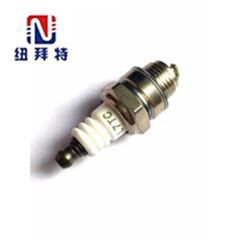

The timing of the spark is incredibly important. If the spark occurs too early, the piston might still be moving up, and the expanding gases could push against it, causing a knocking sound and potentially damaging the engine. If the spark occurs too late, the engine might not produce as much power as it should. That's why it's essential to have a spark plug that can fire at the right time and under the right conditions.
There are different types of sawmill spark plugs available, and each one is designed for specific engine requirements. For example, some spark plugs are better at handling high - compression engines, while others are more suitable for engines that run at lower speeds. As a sawmill spark plug supplier, I know how important it is to match the right spark plug with the right engine.
The Exhaust Phase
After the power phase, the exhaust valve opens, and the piston moves back up again. This pushes the burned gases out of the cylinder and into the exhaust system. The exhaust system then routes these gases out of the engine. This phase is like exhaling; the engine is getting rid of the waste products from the combustion process.
Why Choose Our Sawmill Spark Plugs
As a sawmill spark plug supplier, we offer a wide range of spark plugs that are designed to meet the needs of different four - stroke engines. Our spark plugs are made with high - quality materials, which means they can withstand the high temperatures and pressures inside the engine. They have a precise electrode gap, which ensures a consistent and reliable spark.
If you're in the market for a spark plug for your lawnmower, check out our Spark Plug Lawnmower options. These spark plugs are specifically designed to work well in lawnmower engines, providing the right amount of spark at the right time.
For those of you with other garden machinery, our Spark Plugs For Garden Machinery are a great choice. They are built to handle the unique demands of garden equipment, such as the vibrations and varying loads. And if you're looking for a general - purpose lawn spark plug, our Lawn Spark Plug selection has you covered.
Maintenance and Replacement
To keep your engine running smoothly, it's important to maintain and replace your spark plug regularly. Over time, the electrodes of the spark plug can wear down, and the gap can widen. This can lead to a weaker spark and poor engine performance. A good rule of thumb is to check your spark plug every few months, depending on how often you use your engine. If the spark plug looks dirty or worn, it's probably time to replace it.
Replacing a spark plug is usually a pretty straightforward process. You'll need to remove the old spark plug using a spark plug socket, and then install the new one. Make sure to tighten it to the correct torque specification; too loose, and it might leak, too tight, and you could damage the threads in the cylinder head.
Let's Talk Business
If you're interested in purchasing our sawmill spark plugs or have any questions about how they work, don't hesitate to reach out. We're here to help you find the right spark plug for your engine and ensure that your equipment runs at its best. Whether you're a small - scale gardener or a large - scale sawmill operator, we have the products and expertise to meet your needs.
References
- Heywood, J. B. (1988). Internal Combustion Engine Fundamentals. McGraw - Hill.
- Taylor, C. F. (1966). The Internal - Combustion Engine in Theory and Practice. MIT Press.