

How does a spark plug work in an auto engine?
Oct 28, 2025
Hey there, fellow car enthusiasts! As a long - time spark plug auto part supplier, I've seen all sorts of engines and spark plugs over the years. Today, I'm gonna break down how a spark plug works in an auto engine. It might seem like a small part, but trust me, it plays a huge role in making your car run smoothly.
The Basics of an Auto Engine
Before we dive into how spark plugs work, let's quickly go over the basics of an auto engine. Most cars on the road today use internal combustion engines. These engines work by burning a mixture of air and fuel inside a combustion chamber to create energy. There are four main steps in the four - stroke cycle of an internal combustion engine: intake, compression, power, and exhaust.
During the intake stroke, the piston moves down, and a valve opens to let in a mixture of air and fuel. Then, in the compression stroke, the piston moves back up, compressing the air - fuel mixture. This compressed mixture is where the spark plug comes in.
What is a Spark Plug?
A spark plug is a small but mighty component of your car's engine. It's basically a device that creates an electric spark in the combustion chamber. This spark is what ignites the compressed air - fuel mixture, starting the power stroke of the engine.
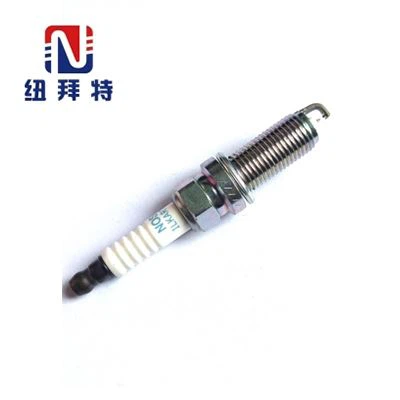
The spark plug has several parts. There's the center electrode, which is where the spark is generated. Surrounding the center electrode is an insulator, usually made of ceramic, that keeps the electricity from leaking out. The outer shell of the spark plug is made of metal and is connected to the engine block, providing a ground for the electrical circuit.

How Does a Spark Plug Work?
Let's get into the nitty - gritty of how a spark plug does its job. When the engine is running, the ignition system sends a high - voltage electrical current to the spark plug. This current travels down the center electrode of the spark plug.
At the tip of the center electrode, there's a small gap between it and the ground electrode. When the high - voltage current reaches this gap, it jumps across, creating a spark. This spark is extremely hot, around 6000°F (3315°C), which is hot enough to ignite the compressed air - fuel mixture in the combustion chamber.
Once the air - fuel mixture is ignited, it burns rapidly, creating a small explosion. This explosion forces the piston down, which turns the crankshaft and ultimately powers the wheels of your car. After the power stroke, the exhaust stroke follows, where the burned gases are pushed out of the engine through the exhaust valve.
Types of Spark Plugs
There are different types of spark plugs available in the market, each with its own advantages. One popular type is the Spark Plug Single Iridium. Iridium is a very hard and durable metal. Spark plugs with iridium tips last longer and can provide a more consistent spark compared to other types. They're also great at handling high - performance engines.
Another type is the Spark Plug Automatic Car. These spark plugs are specifically designed for automatic cars. They're tuned to work well with the engine management systems of automatic transmissions, ensuring smooth and efficient operation.
Overall, Automotive Spark Plugs come in a variety of designs and materials to suit different engines and driving conditions.
Factors Affecting Spark Plug Performance
Several factors can affect how well a spark plug works. One of the most important factors is the spark plug gap. The gap between the center electrode and the ground electrode needs to be just right. If the gap is too wide, the spark might not be able to jump across, leading to misfires. If the gap is too narrow, the spark might not be strong enough to ignite the air - fuel mixture properly.
The heat range of the spark plug is also crucial. The heat range refers to how quickly the spark plug can transfer heat away from the tip. If the heat range is too high, the spark plug might overheat, causing pre - ignition or engine knocking. If the heat range is too low, the spark plug might not stay hot enough to burn off deposits, leading to fouling.
The quality of the fuel you use can also impact spark plug performance. Low - quality fuel can leave behind more deposits on the spark plug, which can reduce its efficiency over time.
Signs of a Bad Spark Plug
So, how do you know if your spark plug is going bad? There are a few signs to look out for. One common sign is a rough idle. If your car shakes or vibrates when it's idling, it could be due to a misfiring spark plug. You might also notice a decrease in fuel efficiency. A bad spark plug can cause the engine to burn fuel less efficiently, which means you'll have to fill up your tank more often.
Another sign is a lack of power when you accelerate. If your car doesn't seem to have the same pep as it used to, a faulty spark plug could be the culprit. You might also see a check engine light come on. Modern cars have sensors that can detect problems with the ignition system, and a bad spark plug can trigger the check engine light.
Replacing Spark Plugs
It's important to replace your spark plugs at the recommended intervals. The replacement interval can vary depending on the type of spark plug and your driving habits. Generally, it's a good idea to check your owner's manual for the specific recommendations for your car.
Replacing spark plugs is a relatively simple task, but it does require some basic tools. You'll need a spark plug socket, a ratchet, and a gap gauge to make sure the new spark plugs are properly gapped. If you're not comfortable doing it yourself, you can always take your car to a mechanic.
Why Choose Our Spark Plugs?
As a spark plug auto part supplier, we take pride in offering high - quality spark plugs. Our spark plugs are made from top - notch materials and are rigorously tested to ensure they meet the highest standards. Whether you have a high - performance sports car or a daily commuter, we have the right spark plug for your engine.
We understand that different engines have different requirements, and that's why we offer a wide range of spark plugs, including the ones I mentioned earlier. Our team of experts is always on hand to help you choose the best spark plug for your car.
Let's Talk Business
If you're in the market for new spark plugs, whether you're a car owner looking to replace the old ones or a business looking to stock up on auto parts, we'd love to hear from you. We offer competitive prices and excellent customer service. Don't hesitate to reach out to us for more information or to start a procurement discussion.
References
- Bosch Automotive Handbook, 8th Edition
- Haynes Repair Manuals
- Chilton's Auto Repair Manuals