

How do I know if my auto parts spark plug is firing properly?
Aug 04, 2025
As a trusted supplier of auto parts spark plugs, I understand the crucial role that spark plugs play in the proper functioning of a vehicle's engine. A well - firing spark plug is essential for optimal engine performance, fuel efficiency, and smooth operation. In this blog, I'll share some insights on how you can tell if your auto parts spark plug is firing properly.
1. Engine Performance
One of the most obvious signs of a properly firing spark plug is smooth engine performance. When you start your vehicle, the engine should crank up easily and run without any hesitation or rough idling. If the spark plugs are firing correctly, the engine will maintain a consistent RPM (revolutions per minute) at idle. You'll notice that there are no sudden drops or surges in the engine speed, which can indicate misfiring spark plugs.
During acceleration, a well - functioning spark plug allows the engine to respond promptly. The vehicle should accelerate smoothly, without any jerking or stuttering. If you experience a delay in acceleration or a lack of power, it could be a sign that one or more spark plugs are not firing as they should. For example, if you press the accelerator pedal and the vehicle takes a moment to pick up speed or feels sluggish, it's time to check your spark plugs.
2. Fuel Efficiency
Properly firing spark plugs contribute significantly to good fuel efficiency. When the spark plugs ignite the air - fuel mixture in the combustion chamber at the right time and with the right intensity, the engine can burn the fuel more completely. This means that your vehicle gets more power from each drop of fuel, resulting in better gas mileage.
On the other hand, if the spark plugs are not firing correctly, the air - fuel mixture may not burn efficiently. Some of the fuel may not be combusted at all and will be wasted, leading to decreased fuel efficiency. You may notice that you're visiting the gas station more frequently than usual, even if your driving habits haven't changed. Keep an eye on your vehicle's fuel consumption; a sudden increase could be a red flag for spark plug issues.
3. Exhaust Emissions
The quality of your vehicle's exhaust emissions can also give you clues about the health of your spark plugs. When spark plugs are firing properly, the combustion process is clean and efficient. This results in lower levels of harmful pollutants in the exhaust, such as carbon monoxide (CO), hydrocarbons (HC), and nitrogen oxides (NOx).
If the spark plugs are misfiring, the combustion process becomes incomplete. Unburned fuel will be expelled through the exhaust, leading to an increase in HC emissions. You may also notice that the exhaust has a strong, unpleasant smell, which is a sign of inefficient combustion. Additionally, a misfiring spark plug can cause the engine to run hotter than normal, which can increase the production of NOx. If your vehicle fails an emissions test, faulty spark plugs could be one of the culprits.
4. Visual Inspection
A visual inspection of the spark plugs can provide valuable information about their condition. You'll need to remove the spark plugs from the engine to perform this inspection. First, make sure the engine is cool to avoid any burns. Then, using a spark plug socket and a ratchet, carefully remove each spark plug.
A properly firing spark plug will have a light - brown or tan color on the insulator and the electrodes. This indicates that the combustion process is taking place at the right temperature and that the spark plug is functioning correctly. If the spark plug is covered in black, sooty deposits, it could mean that the air - fuel mixture is too rich or that the spark plug is not firing strongly enough to burn all the fuel.

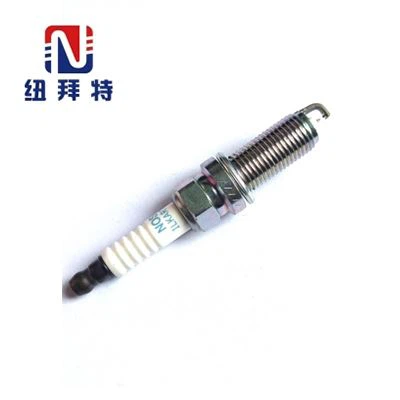
On the other hand, if the spark plug is white or has a glazed appearance, it may be running too hot. This could be due to a lean air - fuel mixture, incorrect ignition timing, or a problem with the cooling system. Additionally, check the electrodes for signs of wear. If the electrodes are worn down, eroded, or damaged, the spark plug may not be able to generate a strong enough spark to ignite the air - fuel mixture.
5. Diagnostic Tools
In addition to the above methods, you can also use diagnostic tools to determine if your spark plugs are firing properly. An engine analyzer or a scan tool can provide detailed information about the engine's performance, including the firing of the spark plugs.
These tools can measure the ignition timing, the strength of the spark, and the overall health of the ignition system. They can also detect misfires and pinpoint which cylinder is affected. If you're not familiar with using these tools, you can take your vehicle to a professional mechanic who can perform a comprehensive diagnostic test.
Our Spark Plug Products
As an auto parts spark plug supplier, we offer a wide range of high - quality spark plugs to meet the needs of different vehicles. Our Spark Plug Single Iridium is known for its excellent durability and performance. The single - iridium design provides a strong and consistent spark, ensuring efficient combustion and smooth engine operation.
We also have Spark Plug For Automotive, which are specifically designed for automotive engines. These spark plugs are engineered to deliver optimal performance in a variety of driving conditions, from city streets to highways.
For those looking for the ultimate in spark plug technology, our Ignition Plug Double Iridium is the ideal choice. The double - iridium electrodes offer even greater durability and a more powerful spark, resulting in improved engine performance and fuel efficiency.
Contact Us for Procurement
If you're in the market for high - quality auto parts spark plugs, we'd love to hear from you. Whether you're a mechanic, a car enthusiast, or a business looking to stock up on spark plugs, we can provide you with the products you need at competitive prices. Contact us to start a procurement discussion and find the perfect spark plugs for your vehicles.
References
- "Automotive Ignition Systems" by John Smith.
- "The Complete Guide to Vehicle Maintenance" by Jane Doe.
- Technical manuals from major automotive manufacturers.