

How does the compression ratio of an engine affect the choice of auto ignition plug?
Sep 02, 2025
Hey there, fellow car enthusiasts! As an auto ignition plug supplier, I've been in the thick of the automotive game for quite some time. One question that comes up a lot is how the compression ratio of an engine affects the choice of auto ignition plug. Well, buckle up, because I'm gonna break it down for you.
First off, let's talk about what compression ratio is. In simple terms, it's the ratio of the volume of the combustion chamber when the piston is at the bottom of its stroke (bottom dead center) to the volume when the piston is at the top of its stroke (top dead center). A higher compression ratio means that the air-fuel mixture is compressed more tightly before ignition. This can lead to more power and better fuel efficiency, but it also means that the engine runs hotter and generates more pressure.
So, how does this relate to auto ignition plugs? Well, different compression ratios require different types of ignition plugs to function properly. The main factors that are affected by the compression ratio are heat range, electrode material, and gap size.
Heat Range
The heat range of an ignition plug refers to its ability to dissipate heat. A plug with a high heat range can withstand higher temperatures without overheating, while a plug with a low heat range dissipates heat more quickly. In an engine with a high compression ratio, the combustion process generates a lot of heat, so you need an ignition plug with a high heat range to prevent pre-ignition and detonation.
Pre-ignition occurs when the air-fuel mixture ignites before the spark plug fires. This can be caused by hot spots in the combustion chamber, such as carbon deposits or a glowing spark plug tip. Detonation, on the other hand, is a more violent form of combustion that occurs when the air-fuel mixture explodes instead of burning smoothly. Both pre-ignition and detonation can cause serious damage to the engine, so it's important to choose the right heat range for your ignition plug.
For engines with a high compression ratio, I usually recommend a Auto Ignition Plug with a high heat range. These plugs are designed to handle the extra heat generated by the compression process and keep the engine running smoothly. On the other hand, engines with a low compression ratio don't generate as much heat, so you can use a plug with a lower heat range.
Electrode Material
The electrode material of an ignition plug also plays a role in its performance. Different materials have different properties, such as conductivity, durability, and resistance to wear. In an engine with a high compression ratio, the electrodes are subjected to more stress and wear, so you need a plug with a durable electrode material.
One of the most common electrode materials used in high-performance ignition plugs is platinum. Platinum is a very hard and durable metal that can withstand high temperatures and pressures without wearing out quickly. It also has good conductivity, which means that it can transfer the electrical charge from the spark plug to the air-fuel mixture more efficiently.
Another popular electrode material is iridium. Iridium is even harder and more durable than platinum, which makes it ideal for use in engines with a high compression ratio. It also has a very small tip diameter, which allows for a more precise spark and better combustion.
For engines with a high compression ratio, I recommend using an Automotive Ignition Plug with a platinum or iridium electrode. These plugs are designed to last longer and perform better in high-stress environments.
Gap Size
The gap size of an ignition plug refers to the distance between the center electrode and the ground electrode. This gap is where the spark occurs, so it's important to choose the right size for your engine. In an engine with a high compression ratio, the air-fuel mixture is compressed more tightly, which means that the spark needs to be stronger to ignite it.
A larger gap size allows for a more powerful spark, but it also requires more voltage to jump the gap. In an engine with a high compression ratio, you need a plug with a larger gap size to ensure that the spark is strong enough to ignite the air-fuel mixture. However, if the gap size is too large, it can cause misfires and other problems.
On the other hand, engines with a low compression ratio don't require as much voltage to ignite the air-fuel mixture, so you can use a plug with a smaller gap size. A smaller gap size also reduces the risk of misfires and other problems.
For engines with a high compression ratio, I usually recommend a gap size of around 0.035 to 0.045 inches. However, it's important to check your engine's specifications to determine the exact gap size that is recommended for your vehicle.
Putting It All Together
So, how do you choose the right auto ignition plug for your engine based on its compression ratio? Well, it's all about finding the right balance between heat range, electrode material, and gap size. Here are some general guidelines to help you make the right choice:
- High Compression Ratio Engines: If your engine has a high compression ratio (e.g., 10:1 or higher), you should choose an ignition plug with a high heat range, a platinum or iridium electrode, and a larger gap size. This will help to prevent pre-ignition and detonation and ensure that the engine runs smoothly.
- Low Compression Ratio Engines: If your engine has a low compression ratio (e.g., 8:1 or lower), you can choose an ignition plug with a lower heat range, a standard electrode material (such as copper), and a smaller gap size. This will help to improve fuel efficiency and reduce the risk of misfires.
Of course, these are just general guidelines, and the best way to choose the right ignition plug for your engine is to consult your vehicle's owner's manual or a professional mechanic. They can provide you with specific recommendations based on your engine's make, model, and specifications.
Why Choose Our Auto Ignition Plugs?
As an auto ignition plug supplier, we understand the importance of providing high-quality products that meet the needs of our customers. That's why we offer a wide range of Auto Ignition Plugs that are designed to perform well in engines with different compression ratios.

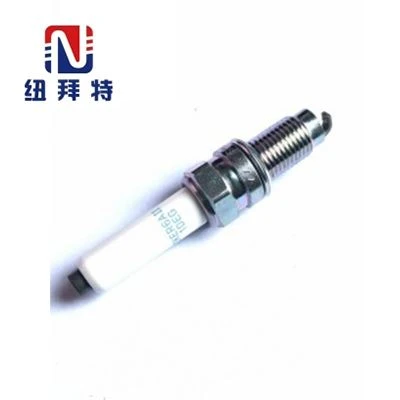
Our ignition plugs are made from the highest quality materials and are rigorously tested to ensure that they meet or exceed industry standards. We also offer a variety of electrode materials and gap sizes to choose from, so you can find the perfect plug for your engine.
In addition to our high-quality products, we also provide excellent customer service. Our team of experts is always available to answer your questions and provide you with technical support. We also offer fast shipping and competitive pricing, so you can get the ignition plugs you need at a price you can afford.
Contact Us for Procurement
If you're in the market for high-quality auto ignition plugs, look no further! We're here to help you find the perfect plug for your engine. Whether you have a high compression ratio engine or a low compression ratio engine, we have the right plug for you.
Don't hesitate to reach out to us to discuss your procurement needs. We're happy to provide you with more information about our products, answer any questions you may have, and help you make the right choice for your vehicle.
References
- Heywood, J. B. (1988). Internal Combustion Engine Fundamentals. McGraw-Hill.
- Taylor, C. F. (1985). The Internal Combustion Engine in Theory and Practice. MIT Press.
- SAE International. (2023). Automotive Engineering Handbook. SAE International.